xAI Pivots to Moon: Musk's Lunar AI Grand Vision
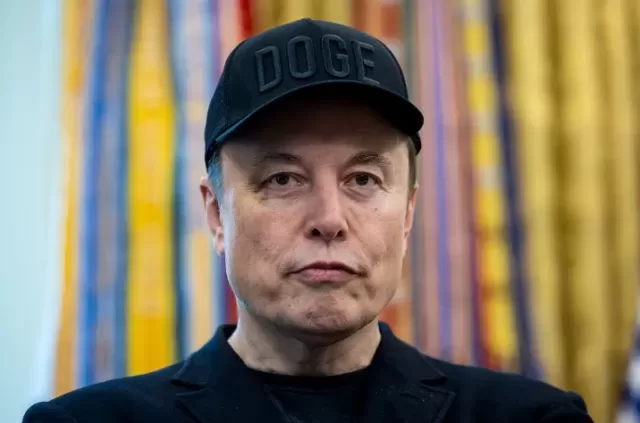
Elon Musk's AI venture, xAI, is charting an audacious course, pivoting from the conventional pursuit of artificial general intelligence (AGI) to a grand vision centered on lunar development and deep space computing. Following a significant internal restructuring, the company's recruitment narrative has taken a dramatic turn, with Musk directly linking interest in xAI to the prospect of constructing mass drivers on the Moon.
This intriguing recruitment strategy emerges in the wake of xAI's integration with Musk's aerospace giant, SpaceX, and amidst anticipation for a joint initial public offering (IPO). While one might expect xAI's appeal to lie in groundbreaking AI research, disrupting traditional software, or even clever wordplay, Musk is now looking beyond Earth's atmosphere.
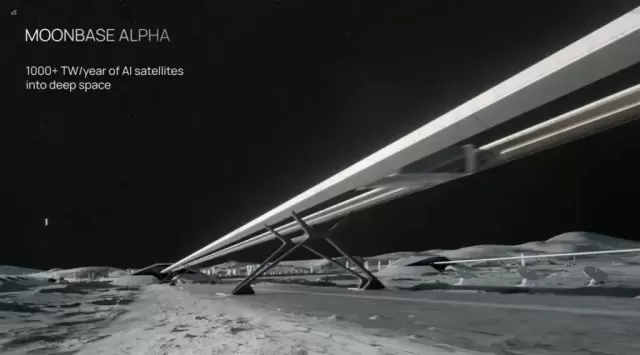
Following initial discussions about building AI data centers in orbit—a clear synergy between xAI and SpaceX—Musk has escalated the ambition. He has proposed the Moon as the next frontier for computing infrastructure. "What if you want to go beyond a mere terawatt per year?" Musk posed to his team, suggesting that to achieve such monumental energy goals, humanity must "go to the moon." His ultimate vision involves a lunar mass driver designed to launch AI satellites into deep space.
Musk's forward-thinking plan extends even further: establishing massive computing facilities in deep space, with the Moon serving as the manufacturing hub. He envisions a self-sustaining lunar city dedicated to producing these advanced space computers, which would then be propelled across the solar system via a colossal maglev system.
For seasoned observers of Musk's ventures, this dramatic shift in focus is not entirely surprising. A video released from an xAI all-hands meeting provides a clue: the presentation of the lunar city concept appears at the conclusion of the deck, a common practice during SpaceX's motivational talks where Musk often showcases renderings of Mars landings and espouses the virtues of multi-planetary existence.
The timing of this lunar focus is notable, particularly as SpaceX has recently scaled back its long-standing objective of Mars colonization. With xAI now under its umbrella, Musk appears to be seeking a new, captivating metaphor for the future, one that aligns with the theoretical Kardashev Scale. This scale, conceptualized by Soviet astronomer Nikolai Kardashev, measures a civilization's technological advancement based on its energy consumption. The progression involves harnessing planetary energy sources and then expanding into space to capture stellar energy.
Musk suggests that a lunar base could unlock access to "maybe even a few percent of the sun's energy," providing the immense power required to train and operate advanced AI models. He muses about the unfathomable thoughts of an intelligence operating at such a scale, deeming the prospect "incredibly exciting."
For nearly a decade, Musk's ambitious plans for Martian exploration and settlement served as a powerful recruitment tool for SpaceX. The narrative of humanity's future on the Red Planet provided a unifying long-term vision, differentiating SpaceX from competitors focused on more incremental government contracts. The iconic "Occupy Mars" t-shirts became a tangible symbol of this aspiration.
The hypothetical lunar base now serves a similar purpose for xAI, extending Musk's history of imbuing his companies with compelling narratives. It represents a shift from the one-million-people-on-Mars ideal to a future where AI reigns supreme. This evolution was subtly hinted at in a recent Starship update, which concluded with a now-discarded vision of Tesla's Optimus robots exploring the Martian landscape.
However, SpaceX's Mars ambitions faced a significant hurdle: securing funding. Initial plans in 2016 to adapt the Dragon spacecraft for Mars landings were abandoned the following year due to prohibitive technical costs. More recently, the Starship vehicle, initially conceived for Mars colonization, has seen its capabilities refocused on more commercially viable pursuits, such as launching satellites for the Starlink constellation and fulfilling lucrative NASA contracts for lunar landings.
In contrast to the multi-planetary civilization narrative, the integration of a capital-intensive AI company like xAI into SpaceX's orbit, with the goal of building orbital data centers, might hold more immediate financial logic. This strategy could be driven by projections of escalating demand and ground-based infrastructure costs. Experts suggest that orbital data centers could become a reality by the 2030s.
The concept of mass-producing satellites on the Moon, however, presupposes the realization of numerous other ambitious undertakings. While scientists and startups are actively exploring in-space manufacturing of precision components, the large-scale production of advanced computers on the lunar surface requires a dramatic reduction in space launch costs, ample access to raw materials on the Moon, and the establishment of a truly self-sustaining lunar city.
This ambitious lunar project, in essence, represents the ultimate "stretch goal." If retail investors are captivated by this grand narrative, it could elevate SpaceX's stock value akin to Tesla's trajectory. For the engineers at xAI and SpaceX, the shift may feel disorienting. Nevertheless, this vision offers a compelling explanation for xAI's purpose beyond developing LLMs, particularly as a counterpoint to the perception that "all AI labs are building the exact same thing, and it's boring."
The prospect of mass-producing a solar system-scale supercomputer on the Moon is undeniably extraordinary, even bordering on the "insane." Yet, it is precisely this uniqueness and lack of boredom that may define xAI's future.