Perseverance Explores Martian Megaripples: Unlocking Secrets of the Red Planet's Dynamic Surface
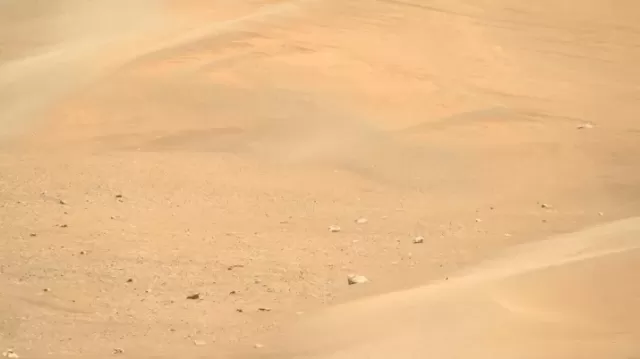
The Perseverance rover is currently engaged in a fascinating investigation of inactive megaripples at a location dubbed "Kerrlaguna" on Mars. These large, windblown sand formations, reaching up to a meter in height, offer a unique opportunity to study the ongoing processes that shape the Martian landscape.
After encountering challenging terrain while attempting to reach a rock exposure named "Midtoya," Perseverance shifted its focus to "Kerrlaguna." The rover's previous attempts to ascend a steep slope towards "Midtoya" were hampered by difficult conditions, including a combination of the gradient and loose, rocky soil. Although the planned route was abandoned, the rover successfully acquired data from spherule-rich rocks presumed to have rolled down from the target area, including the intriguing "Horneflya" rock, distinguished by its witch hat or helmet-like shape.
The scientific community has a keen interest in these megaripples. While Perseverance often concentrates on deciphering the ancient history preserved in Martian rocks, understanding the present-day Martian environment is equally crucial. This endeavor builds upon the work of the Curiosity rover, which explored an active sand dune known as "Namib Dune" within Gale crater nearly a decade ago.
Unlike the active dunes studied by Curiosity, the megaripples at "Kerrlaguna" appear to be largely inactive and covered in dust. Studying these older, immobile formations could reveal valuable information about the roles of wind and even fleeting water activity in shaping the modern Martian surface.
Perseverance is employing its array of sophisticated instruments, including SuperCam, Mastcam-Z, and MEDA, to meticulously analyze the megaripples. These instruments are providing data on the surrounding environment, the size and chemical composition of the sand grains, and the presence of any salt crusts that may have developed over time.
The data collected from these investigations is not only expanding our knowledge of Mars but also potentially laying the groundwork for future human exploration. Documenting these potential resources could prove vital for astronauts venturing to Mars, as they may be able to utilize materials found within Martian soils to aid in their survival.
The "Kerrlaguna" investigation is considered a preliminary exercise for a more comprehensive campaign planned at "Lac de Charmes," a more extensive field of larger bedforms further along Perseverance's planned route. This ongoing research promises to unlock further secrets of the Red Planet's dynamic environment and its potential for future exploration.