Automakers Lobby to Ease EV Mandates, Citing Job and Investment Risks in UK
Internal documents reveal that prominent automotive manufacturers privately lobbied against stringent regulations pushing electric vehicle (EV) sales, arguing that such rules would jeopardize British jobs and incur substantial financial losses.
Companies like BMW, Jaguar Land Rover (JLR), Nissan, and Toyota, in their official responses to government proposals, expressed concerns that mandated increases in EV sales quotas would negatively impact their investments within the United Kingdom. These submissions, obtained by the "Fast Charge" electric vehicle newsletter and subsequently shared with The Guardian, illustrate the carmakers' efforts to advocate for a more gradual shift away from traditional combustion engine vehicles.
JLR, the company behind Land Rover, specifically warned that maintaining the original regulations would significantly impede domestic producers' capacity to invest in new vehicle models.
Under the previous Conservative administration, the Zero Emission Vehicle (ZEV) mandate was established, requiring car manufacturers to progressively increase their proportion of EV sales annually, or face substantial financial penalties.
Although EV sales have seen rapid growth, exceeding 20% of the market in July, and all automakers met the targets last year, the manufacturers have faced unexpected lower demand than expected and were obligated to cut prices to attract buyers.
While consumers benefitted from lower prices, the automotive sector has insisted they cannot sustain the low cost. Following intense lobbying efforts, the current Labour government adjusted the ZEV mandate in April, introducing greater "flexibility" that permits carmakers to sell more petrol-powered vehicles.
The consultation responses expose the detailed arguments car manufacturers made in closed-door discussions for a more lenient approach, despite warnings from the government's own climate advisors that such changes could contribute to a rise in the UK's carbon footprint.
BMW, which manufactures Mini and Rolls-Royce vehicles in the UK, stated that the country's manufacturing environment had worsened post-Brexit. They added that the ZEV mandate was "far more demanding" than similar regulations implemented in the European Union or California.
BMW warned that a more challenging market environment could negatively affect competitiveness, and have detrimental effects on their 8,000 jobs (and 50,000 supply chain jobs) within the UK.
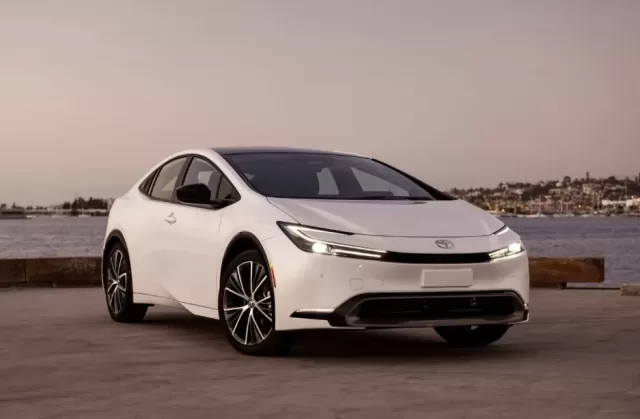
Toyota, a company that operates factories in Derbyshire and North Wales, claimed that "penalties could reach hundreds of millions of pounds for individual companies," putting employment and investment across the industry at risk. Toyota, who has focused on Hybrid cars, also successfully lobbied for the continued sales of hybrid vehicles to be permitted until 2035 in the UK.
Nissan, whose single European plant is located in Sunderland, argued that manufacturers required more flexibility, or face costs that would detract funds "from battery EV research and development within the UK."
JLR raised concerns about the rule allowing manufacturers to purchase "credits" from competitors with EV sales exceeding targets. They suggested that this system effectively meant British companies were subsidizing rival businesses, particularly those based in China, the dominant force in EV production.
However, proponents of stricter regulations argue that the ZEV mandate has been effective in compelling carmakers to transition to electric vehicles.
Ben Nelmes, head of New Automotive, an organization that advocates for the shift to EVs, stated that "The consultation submissions from the car industry themselves confirm that the ZEV mandate targets for 2024 were achieved, demonstrating the policy's effectiveness in driving change."
He added that the "focus should shift to speeding up the transition, as the data shows the UK automotive industry is capable of providing cleaner, more affordable transportation."
Tom Riley, author of the Fast Charge newsletter, criticized the carmakers' tactics, stating that they "are happy to emphasize their commitment to the UK when it suits them, but using threats of job losses and reduced investment to weaken climate policy is cynical."
Mike Hawes, chief executive of the Society of Motor Manufacturers and Traders (SMMT), a lobbying group, said that "The automotive industry is facing challenges of a scale never seen before, specifically the transition to EVs in a weakened economy as well as global competition. The ZEV mandate adds pressure, with brands needing to spend billions to drive demand to comply. UK manufacturers warned that this cost was unsustainable and would threaten further investment."
He went on to say that the government was correct in changing the goals, which would have equated to decarbonization that harmed industry.
A BMW spokesperson stated that the company supports climate targets, but added, "We think consumers will decide how fast ZEV adoption happens, not mandates."
A Nissan spokesperson noted that the new approach from the government towards lower than expected EV uptake was welcome, and that the focus on incentives that increased consumer demand to meet ZEV mandate requirements was positive.
JLR and Toyota declined to provide any comments.