Tech Tackles Car Sickness in the Age of Autonomous Vehicles
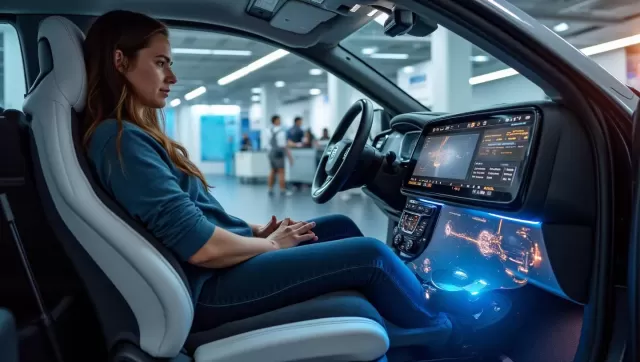
Motion sickness affects a significant portion of the population, with approximately one-third of adults and half of all children experiencing it. This issue is amplified for passengers, who often lack the anticipatory awareness that drivers possess, leading to discomfort. As the transportation landscape shifts towards self-driving cars and ride-sharing services gain popularity, mitigating motion sickness is becoming increasingly crucial.
Researchers at the University of Michigan are actively developing solutions to tackle this growing problem. A startup called Motion Sync, founded by Daniel Sousa Schulman and Professor Shorya Awtar, is spearheading the effort to bring innovative technology to market.
Years of research, including extensive testing with over 150 participants at U-M's Mcity, have yielded promising results. Studies revealed an 80% positive response, with subjects indicating they'd want this technology integrated into their future vehicles, showing a clear decrease in motion sickness symptoms.
Awtar explains that passengers are more susceptible to motion sickness simply because they are unaware of impending vehicle maneuvers. Drivers instinctively brace themselves for turns and braking, preparing their bodies accordingly. Passengers, however, are caught off guard, causing discomfort.
PREACT: A Two-Pronged Approach
Motion Sync's technology, dubbed PREACT, offers two potential solutions:
- Aftermarket Seat Cushion: Expected to be available soon, this low-profile cushion will utilize haptic feedback, delivering subtle vibrations to alert passengers of upcoming turns or stops. These "intuitive" vibrations aim to create a sense of anticipation, reducing the element of surprise. Schulman envisions this product being affordable and accessible, requiring a monthly software subscription to manage the system's core functions.
- Integrated Seat Technology: Currently in development, this option involves seats that physically tilt and adjust in anticipation of vehicle movement. While a more significant investment, this integrated solution promises a seamless and proactive approach to motion sickness prevention in new vehicles. The team is actively collaborating with a major automaker to bring this concept to fruition.
Motion Sickness in the Era of New Transportation
The rise of autonomous vehicles exacerbates the motion sickness challenge. Since everyone becomes a passenger in a self-driving car, susceptibility to motion sickness increases dramatically. Studies highlight a near doubling in the likelihood of experiencing symptoms compared to conventional, driver-operated vehicles.
Electric vehicles also contribute to the problem. Their regenerative braking systems, which can be quite abrupt, and the lack of auditory cues present in gasoline-powered cars, make occupants more vulnerable to motion sickness. Even ride-hailing services, where passengers relinquish control, can trigger discomfort.
Schulman emphasizes that as people transition into passive passengers, the potential for motion sickness will increase, especially if they intend to work or relax during their commutes. PREACT aims to address this emerging need.
The project receives funding from various sources, including the U.S. Department of Transportation, the Michigan Translational Research and Commercialization for Advanced Transportation, and the Michigan Economic Development Corporation Office of Future Mobility and Electrification.