In August 2022, I was leading an expedition to UT Peak (6100m), my first climb after the COVID-19 pandemic. I wasn’t sure if I was ready to lead the expedition. After the pandemic, I had applied to a few universities, hoping to spend a year away from the struggling tourism industry. At the university, I lost a significant amount of weight, and I didn’t quite fit into the culture there. I missed climbing and playing hockey, but I had no choice but to pretend I was headed toward a future in academia. This pretending made me miss climbing even more. In the mountains, there is no pretending; either you know the mountain, or you don’t.
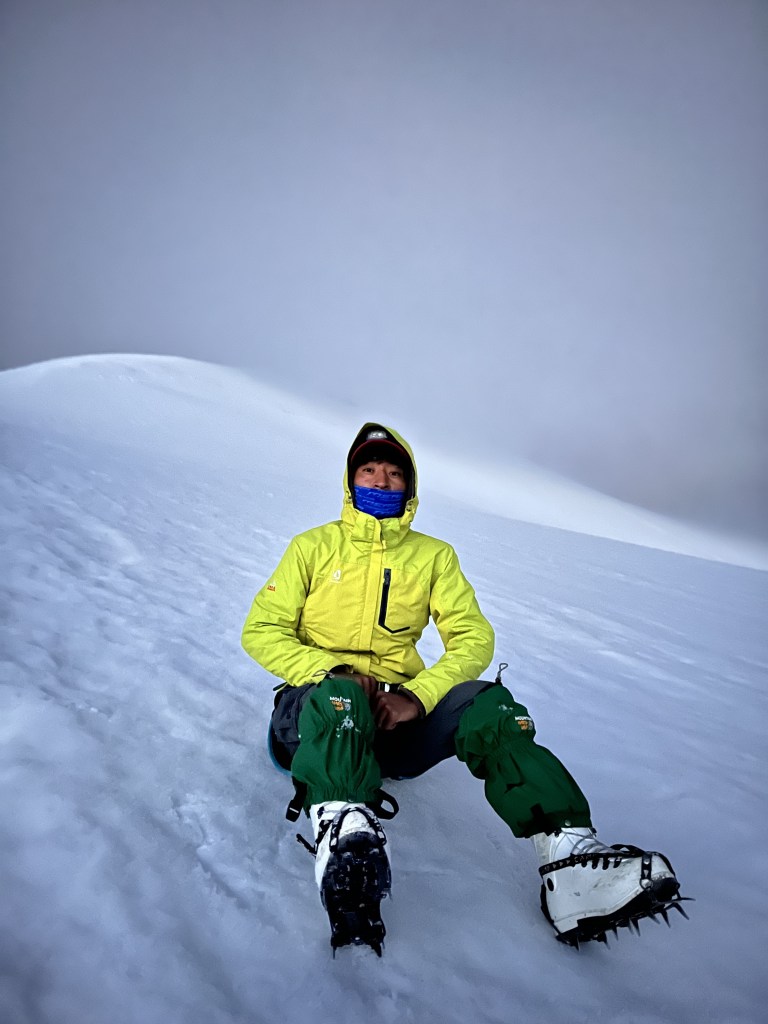
UT Kangri 6070m
I had been completely cut off from climbing for nearly three years. During that time, I would often imagine myself walking along the ridge of a peak, a vivid picture of myself hanging on a steep wall, attached to a rope. For some reason, I’ve always liked to imagine myself alone, fixing the rope and finding my way. This part of mountaineering is my favorite—like solving a maze to uncover the route to the treasure. The only difference was that in reality, I had to physically dig through snow to find the path to the summit, the treasure.
August was a hot month, and it was my first expedition to UT Peak. I was coming out of a difficult time—I’d lost money in stocks and was trying to establish a network in the post-COVID climbing world. There were twelve of us: three guides, four porters, one cook, and seven clients. Since this was my first time on UT Peak, I didn’t know the route, nor had I seen the peak before—it was newly opened to tourism. I was low on confidence, feeling like I had never held an ice axe or carried a 20kg backpack.
We trekked through the valley for two days and reached base camp on the third day. When I looked to my right, UT Peak stood above us. It didn’t look like a six-thousand-meter peak—my first reaction was, “That’s just a hill.” The base camp was incredibly scenic, surrounded by tundra vegetation, a glacial stream, and hundreds of pikas, marmots, and horses. There were tents of different colors pitched in various places—some on the hills, some by the base, and some next to the water source. This first view of the camp was precious. I felt a deep sense of belonging and familiarity. Even though I hadn’t met many of the people, they felt like old mountain companions. The offering of tea and the loud “Julley” pulled me right back into the zone, where I could be myself—no judgment, no questions. It felt like I was accepted as a mountain fellow, returning home after years of searching for stability, honor, and identity outside my home—the mountain. There was no burden of fitting in, no obligations. I felt free. I was free.
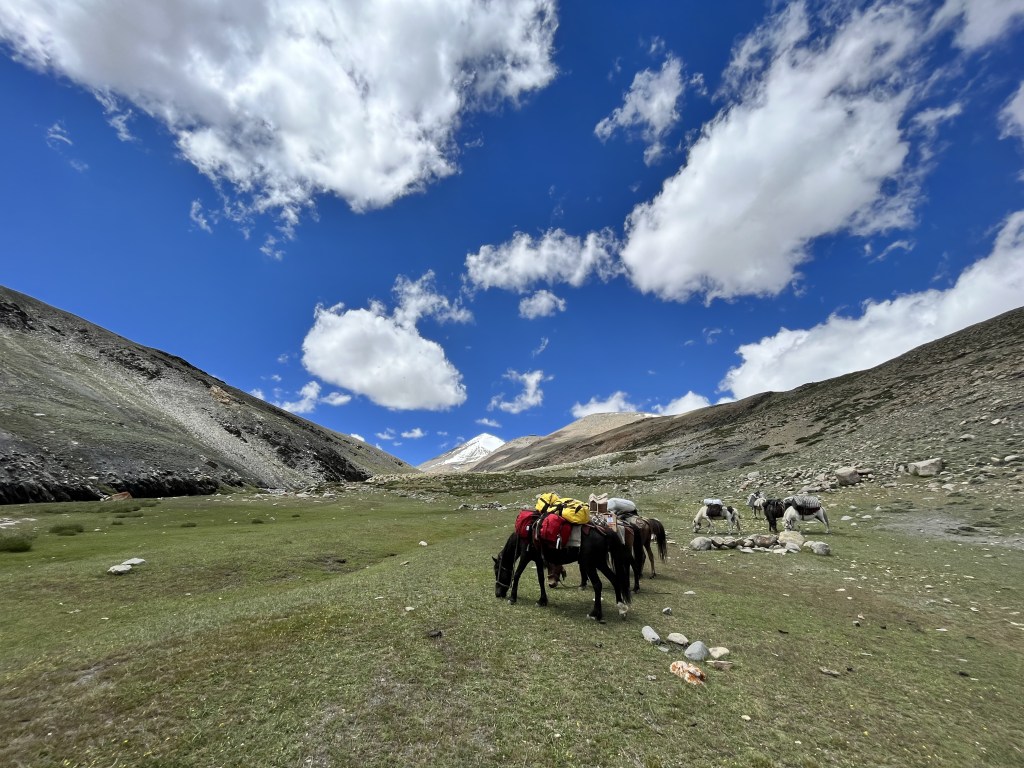
The base camp (horses or ponies are use for carrying equipment)
On the night of the summit push, we stayed up until midnight, playing cards. The plan was to have tea and breakfast at midnight and leave for the summit at 1:00 AM. The only thing my mind and body had grown used to from my time at the university was staying up late. I didn’t really enjoy staying up, but getting a good sleep was also difficult. There was always so much on my plate, and small talk was the only conversation happening. In the mountains, though, late-night talks are different—filled with folklores, climbers sharing stories, or revisiting childhood memories. These conversations were largely missing at the university.
Just before we took our first step toward the summit, we shouted, “KiKi SoSo Lhar Gyalo” (Victory to the god). Then we began our ascent. I could only hear the sound of stream, our footsteps, and heavy breathing. As we crossed the rocky part of the trail, we reached the glacier. From there, we used ropes, crampons, and ice axes. I always find so much similarities between our journey through life and the different stages of a climb to the summit. Each stage requires different tools, different approaches. Life is much the same—each stage demands unique tools and strategies. Just like on a slippery glacier, we are more likely to fall and struggle, but that’s why we are equipped with the tools and strength needed to move forward and reach the next stage. We grow through the challenges, and the right tools will always guide us toward our own personal summits.
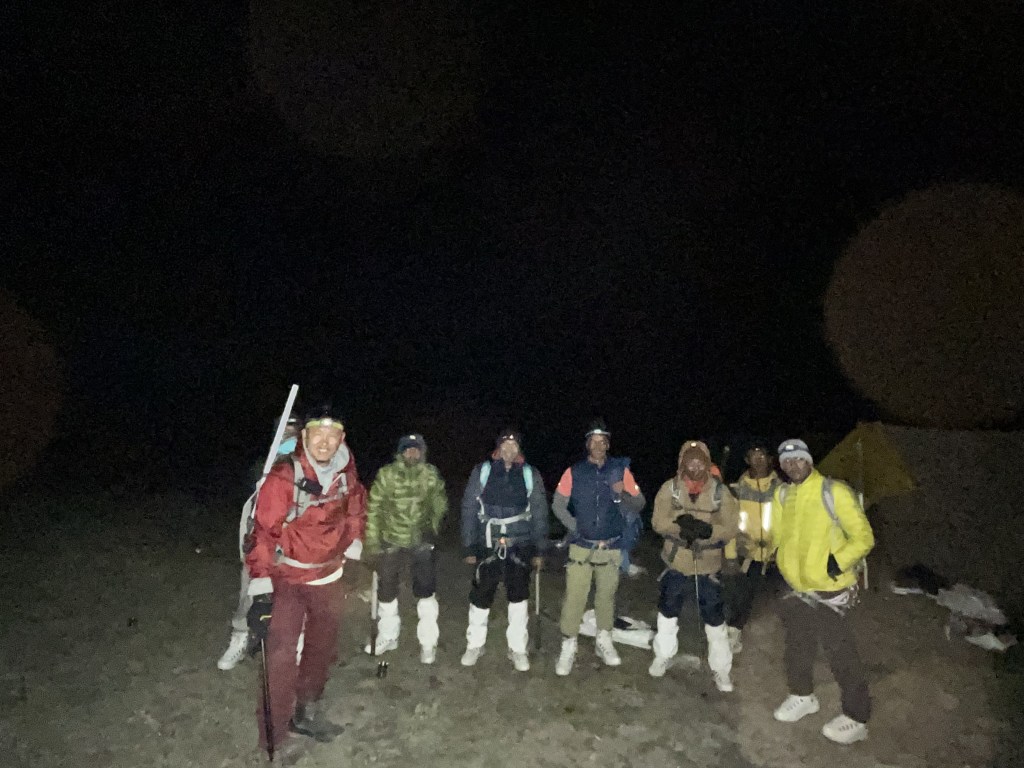
Before the summit push
This ascent wasn’t easy, and I didn’t expect it to be. I remember feeling scared crossing a couple of crevasses that were wide and deep, and I was equally worried about three of our climbers (clients) who were new to the sport. There was one particular point, almost like a vertical ice wall, that made me the most nervous—not because of the steep incline, but because the snow was hard, and it was difficult to properly plant my ice axe. Looking over the edge, I imagined the worst-case scenario—one of us falling and dragging the others down the mountain since we were roped together.
After that, the climb became easier. I felt more comfortable and confident in my footing. I could sense the firm hold I had on the ice, and I trusted the rope more. By 9:36 AM on August 18, we reached the summit—100% success for our team. As we stood there, taking in the vast horizon of clouds and basking in the sun, I took a long look at the climbers. I was proud of them, but more than that, I was just so happy to be there. Finding that extra ounce of air at that height was a true blessing.
Almost three years had passed since I’d last stood on the summit of a peak, and this one felt like my first all over again. Maybe it was because of how much I had missed it, or how hard I had been on myself for not finding a way sooner to experience that feeling of invincibility—the feeling of being one with the mountain, in nature’s company, accepted as I am. Not having to prove anything to anyone is the greatest form of freedom, and that’s exactly what I felt on my first ascent of UT Peak.
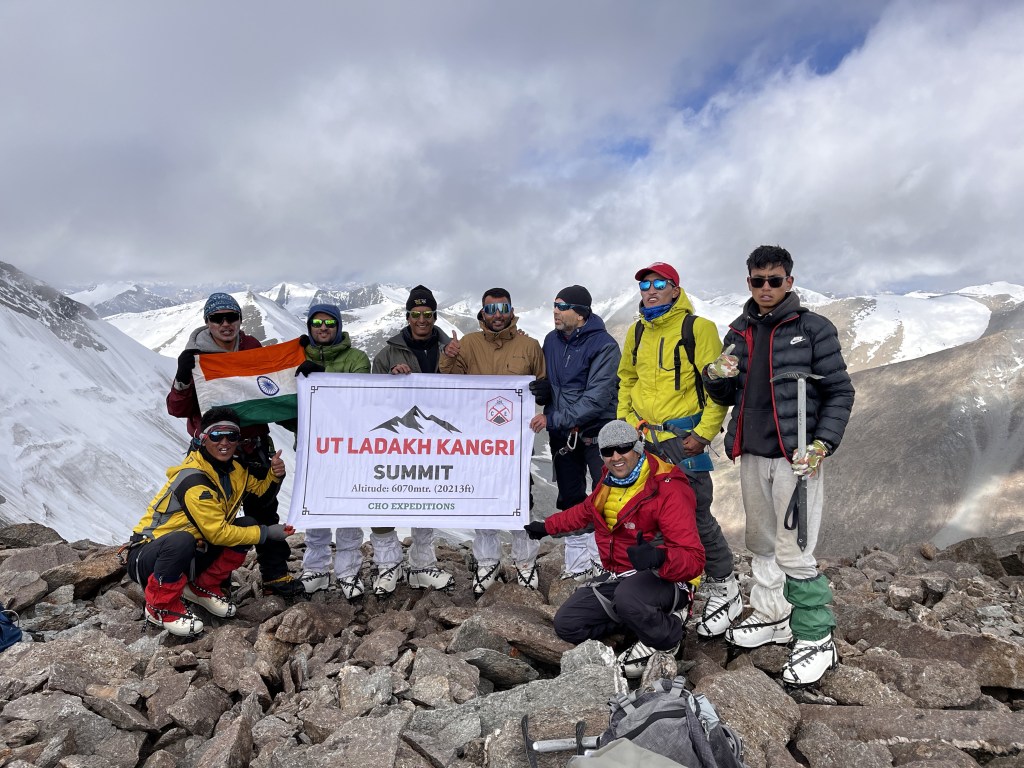
original journal entry date : 17 September 2022
 Thin Air Journal