
Artificial Wombs: Redefining Birth, Facing Ethics
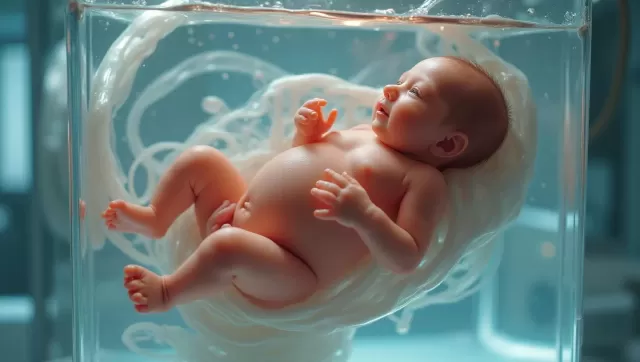
The advent of artificial womb technology promises to redefine the boundaries of human gestation, offering a lifeline to extremely premature infants and posing profound ethical and emotional questions.
Beth Schafer experienced the stark reality of this challenge firsthand. At just 23 weeks, her son was born, far too early for his underdeveloped lungs to function. Despite the tireless efforts of medical professionals, the infant's survival hinged on a crucial element beyond their immediate reach: more time within the womb. This heart-wrenching experience fuels Beth's deep conviction about the preciousness of her son and the lengths to which she would go to protect him.
Scientists globally are actively pursuing this very goal – extending the gestational period for critically premature babies. A significant breakthrough emerged in 2017 with the unveiling of an experimental artificial womb capable of gestating fetuses outside the body. Early prototypes, demonstrated with fetal lambs, showcased their ability to sustain circulation and organ development. While these early tests were on animals, the technology is steadily advancing toward human application. The US Food and Drug Administration has begun considering the ethical and practical implications, with potential clinical trials focusing on infants born between 22 and 24 weeks gestation. In the United States alone, over 10,000 infants annually fall into this highly vulnerable category, facing significant risks of mortality and lifelong complications.
A New Frontier in Fetal Development
The concept of an artificial womb challenges our fundamental understanding of human development and parenthood. Elizabeth Chloe Romanis, a medical law scholar, highlights that this technology introduces a novel stage of human development that requires new frameworks for description and regulation. This development necessitates grappling with complex questions about life preservation, the definition of life itself, and the intersection of biology and technology.
The "Aquarium" Analogy
The physical manifestation of these artificial wombs can evoke varied imagery. One prototype, developed by the Dutch startup AquaWomb, resembles a sophisticated aquarium. Housed in a laboratory setting, this glass tank circulates synthetic amniotic fluid at a precise temperature, mimicking the intrauterine environment. Designed to protect extremely premature infants, it allows them to float, ingest nutrients, and excrete waste without exposure to air.
The system meticulously replicates the protective embrace of pregnancy. A flexible inner sac within the tank adjusts to the growing fetus, while an outer layer provides gentle resistance, encouraging muscle development. However, the most significant hurdle remains the infant's undeveloped lungs.
Bypassing the Pulmonary Crisis
In standard births, the first breath triggers critical respiratory function. For extremely premature infants, this is an impossible feat. Current neonatal intensive care units rely on mechanical ventilators and incubators, interventions that carry their own risks of lasting damage. Once exposed to air, the lungs become irreversibly activated, making it impossible to revert to an intrauterine state.
Artificial wombs aim to circumvent this acute crisis. In AquaWomb's model, a baby delivered via cesarean section is transferred into a fluid-filled pouch. The umbilical cord is then connected to an artificial placenta, a complex device that filters carbon dioxide and delivers oxygen and nutrients. This intricate process, likened to juggling flaming balls, aims to provide the necessary time for the baby's lungs to mature, preventing irreversible brain damage from oxygen deprivation.
Secrecy and the Quest for "The Best"
The revolutionary nature of artificial wombs has led many research teams to adopt a degree of secrecy, often opting for less provocative terminology like "womb-like life support system" or "biobag." This caution stems from the sensitive nature of reproductive technologies and the potential for sensationalized interpretations.
AquaWomb, for instance, prioritizes parental involvement in their design, incorporating features like access ports for touching infants and a "uterus phone" to transmit voices and music. These elements aim to foster parental bonding, recognizing that a departure from the natural course of pregnancy can impact a parent's sense of self and their role as a caregiver.
The Echoes of Loss and the Hope for Tomorrow
Support groups for parents who have experienced late-term pregnancy loss or infant death reveal the profound impact of prematurity. Many attendees, whose children might have been candidates for artificial wombs, grapple with the agonizing "what ifs." The possibility of having had more time, of greater intervention, offers a flicker of solace but also underscores the depth of their loss.
The conversations within these groups reveal a complex tapestry of emotions. While the desire to save a child is paramount, there are also anxieties about the potential for coercion and the pressure to utilize every available technology, regardless of its experimental nature. Questions arise about whether the availability of such technology would have altered decisions like pursuing surrogacy, highlighting the deeply personal and often fraught choices involved.
Navigating the Ethical Maze
As artificial wombs move closer to clinical application, they compel us to confront challenging ethical dilemmas. The prospect of complete ectogenesis – gestation entirely outside the human body – remains a distant, science-fiction scenario. However, even the current technology raises concerns about informed consent, particularly when parents are driven by a desperate hope to save their child.
The fear of making the "wrong" choice for one's child is a universal parental concern. The question of whether to utilize an artificial womb, even with the best intentions, can lead to prolonged suffering or a sense of guilt if the outcome is not as hoped.
Painting a New Future
For parents like Beth, the journey through grief and the contemplation of artificial wombs are intertwined. The process of dismantling a nursery, once filled with anticipation, becomes a poignant metaphor for letting go and reimagining the future. The possibility of an artificial womb offers a hypothetical alternative, a chance for a different brush with life, but it does not erase the pain of what was lost.
The development of artificial wombs is not merely a scientific endeavor; it is a societal one. It demands careful consideration of the profound ethical, emotional, and practical implications, ensuring that this revolutionary technology serves to enhance, rather than complicate, the intricate journey of parenthood and the preciousness of every human life.